What Happens to Scar Camouflage When You Get a Tan in the Summer?
Published on September 16, 2026
Reviewed by Evie Delaney, CDT, Master Paramedical Artist
The short answer
Your camouflaged scar does not tan the way the skin around it does, but that is not the problem it sounds like. The pigment is placed in the dermis, below the layer of skin that tans, and it softens the contrast that makes an untreated scar stand out. The keys are avoiding direct sun and tanning during your sessions so we can match your natural skin tone, then wearing a mineral-based SPF 50 or higher every day, year-round, once your work is complete.
Why scars stand out more in the summer
Many mature scars, especially pale (hypopigmented) ones, are made of tissue that lacks fully functioning melanocytes, the cells that produce the pigment responsible for tanning. When the skin around the scar darkens in the sun, the scar does not, and the contrast becomes sharper. That is why we are asked about the sun so often.
Dark and red scars are a different challenge. Rather than adding lightness, we neutralize the excess dark and red pigment so the scar blends with the surrounding skin.
How scar camouflage prepares the skin for the sun
- Color placed in the dermis. We implant custom-blended pigment directly into the dermis, beneath the epidermis. That anchors a healthy-looking baseline tone below the surface. Like all pigment, it can fade over time, and daily sun protection helps prevent premature fading.
- Softer contrast, not an identical tan. The treated area is colored by permanent pigment rather than active melanocytes, so it does not technically tan. What changes is the contrast: instead of a stark line against bronzed skin, the scar stays a soft, blended tone that flows into the surrounding skin.
Sun protection rules for scar camouflage
- During your sessions: avoid direct sun exposure if possible while you prepare for and go through your treatment series. Tanning or spray tanning can interfere with our ability to match the camouflage pigment to your natural skin tone.
- If the scar cannot be covered: for a scar on the face, neck or another exposed area, wear a mineral-based sunblock of SPF 50 to 70 and/or use hats, visors or sunglasses to protect the skin.
- Once your work is complete: after 8 to 10 weeks, use a mineral-based, broad-spectrum sunblock of SPF 50 or higher year-round. This preserves the integrity of the artwork and helps prevent premature fading of the pigment. Sunscreen increases the longevity of your investment in camouflage.
See it in a real client
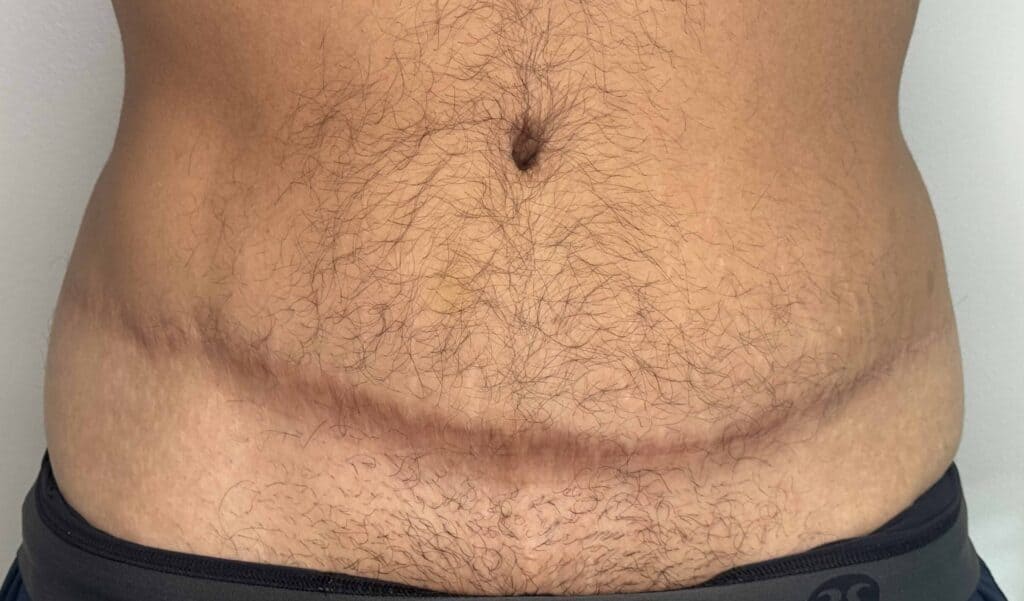
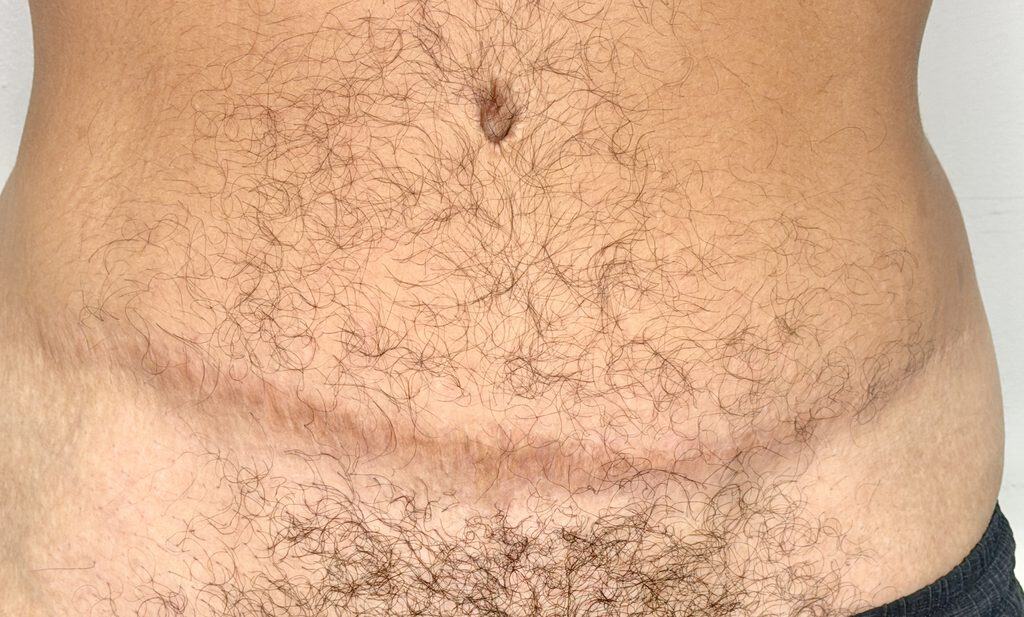
In our tummy tuck scar camouflage case study, a client with a four-year-old dark, red scar completed his third session during the summer. See his photos and progress so far.
New to scar camouflage? Read 5 Things to Know Before Getting Scar Camouflage.
Have a dark or red scar? Learn more about our Lighten Dark & Red Scars service.
Frequently asked questions
Will my camouflaged scar tan?
The treated area is colored by permanent pigment rather than active melanocytes, so it does not technically tan the way the surrounding skin does. The goal is to reduce the contrast so the scar blends softly into your seasonal skin tone.
Should I stay out of the sun during my scar camouflage sessions?
If possible, yes. Avoid direct sun exposure, tanning and spray tanning while you are preparing for and going through your sessions, because they can interfere with our ability to match the camouflage pigment to your natural skin tone. If the scar cannot be covered, wear a mineral-based sunblock of SPF 50 to 70 and/or use hats, visors or sunglasses.
What sunscreen should I use once my scar camouflage is complete?
Once your work is fully complete, after 8 to 10 weeks, use a mineral-based, broad-spectrum sunblock of SPF 50 or higher year-round. It preserves the integrity of the artwork, helps prevent premature fading of the pigment, and increases the longevity of your investment in camouflage.
Why does a scar stand out more in the summer?
Many mature scars, especially pale ones, lack fully functioning melanocytes, the cells responsible for tanning. As the surrounding skin darkens, the scar does not, and the contrast sharpens.
How are dark or red scars treated differently?
Rather than adding lightness, we neutralize the excess dark and red pigment so the scar blends with the surrounding skin. In our tummy tuck case study, a four-year-old dark, red scar lightened noticeably after two sessions. Results vary by client.
Your next step
Every client begins with a free phone consultation. If it looks like a good fit, we complete an in-person evaluation on appointment day. Weekend appointments are available.